Iris Dataset
EasyThe classic Iris flower dataset for quantum classification
Samples
150
Features
4 (Sepal, Petal)
Classes
3 (Iris Species)
Difficulty
Easy
This dataset contains measurements of iris flowers from three different species. Each flower is described by four features: sepal length, sepal width, petal length, and petal width. This is an ideal starting point for quantum machine learning as the feature space is moderate and the classification task is well-understood.
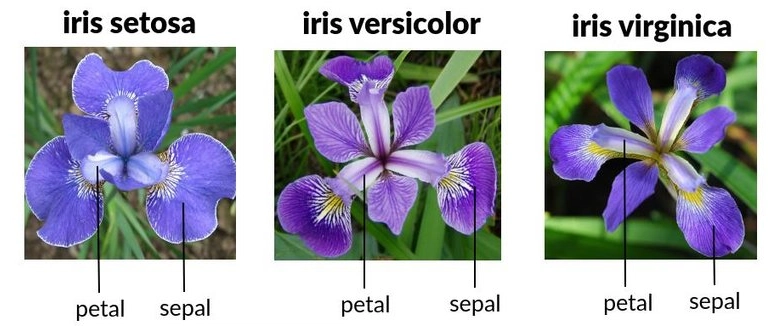
Classes Used in This VQC:
The backend filters the dataset to keep only the first two classes using:mask = (y == 0) | (y == 1)
Encoded state representation:
where:
Sepal Length
Mean: 5.84 cm | Std Dev: 0.83 cm
Sepal Width
Mean: 3.06 cm | Std Dev: 0.43 cm
Petal Length
Mean: 3.76 cm | Std Dev: 1.76 cm
Petal Width
Mean: 1.20 cm | Std Dev: 0.76 cm